🔱 What is a Jyotirlinga? The Supreme Light of Lord Shiva
A Jyotirlinga or Jyotirlingam (Sanskrit: ज्योतिर्लिङ्ग) literally translates to the "Radiant sign of The Almighty". According to the Hindu religion, these are supremely sacred shrines where Lord Shiva is worshipped in the form of a Jyotirlingam — representing his infinite, formless, and beginningless manifestation as a majestic pillar of light.
Lord Shiva first manifested himself as a Jyotirlinga on the auspicious night of the Aridra Nakshatra. The Shiv Purana describes how Brahma and Vishnu argued about the supremacy of creation. To settle this, Lord Shiva pierced the three worlds as an infinite pillar of fire. There is nothing to distinguish their physical appearance from ordinary lingams, but it is believed that individuals who reach a higher level of spiritual attainment can see these lingas as brilliant columns of fire piercing through the earth.
There are twelve traditional Jyotirlinga shrines located across India. Visiting all 12 Jyotirlinga is considered one of the highest spiritual achievements in Hinduism, believed to wash away the sins of seven lifetimes and grant Moksha (liberation).
📍 List of 12 Jyotirlinga of Lord Shiva
12 Jyotirlinga kahan kahan hai? Below is the comprehensive 12 Jyotirlinga table, detailing the name, location, and a brief description of the sacred shrines across India.
| # | Jyotirlinga Name | Location & State | Spiritual Significance |
|---|---|---|---|
| 1 | Somnath | Prabhas Patan, Gujarat | Considered the first among the 12 Jyotirlinga. Dedicated to Lord Shiva who relieved the Moon God (Soma) from a curse. |
| 2 | Mallikarjuna | Srisailam, Andhra Pradesh | Located on Shri Shaila Mountain. It is uniquely both a Jyotirlinga for Lord Shiva and a Shakti Peetha for Goddess Bhramaramba. |
| 3 | Mahakaleshwar | Ujjain, Madhya Pradesh | The only south-facing (Dakshinamukhi) Swayambhu Jyotirlinga. Famous for its powerful dawn Bhasma Aarti. |
| 4 | Omkareshwar | Mandhata Island, Madhya Pradesh | Situated on an island in the Narmada river shaped naturally like the sacred 'OM' (ॐ) symbol. |
| 5 | Kedarnath | Rudraprayag, Uttarakhand | The northernmost Jyotirlinga, situated at 3,583m in the Himalayas. Linked closely to the Pandavas from the Mahabharata. |
| 6 | Bhimashankar | Pune district, Maharashtra | Source of the Bhima River. Established where Lord Shiva reduced the demon Tripurasura to ashes. |
| 7 | Kashi Vishwanath | Varanasi, Uttar Pradesh | The spiritual heart of India. It is believed that Lord Shiva whispered the mantra of salvation in Kashi. |
| 8 | Trimbakeshwar | Nashik, Maharashtra | Origin of the sacred Godavari river. Unique for having three lingams representing Brahma, Vishnu, and Shiva. |
| 9 | Vaidyanath | Deoghar, Jharkhand | Also known as Baba Baidyanath. Where Lord Shiva acted as a 'Vaidya' (divine physician) to heal Ravana. |
| 10 | Nageshwar | Dwarka, Gujarat | Symbolizes protection from all poisons and evils. Features a massive 25m tall statue of Lord Shiva. |
| 11 | Rameshwaram | Rameswaram Island, Tamil Nadu | The southernmost Jyotirlinga, famously worshipped and installed by Lord Rama himself before crossing to Lanka. |
| 12 | Grishneshwar | Aurangabad, Maharashtra | The last of the 12 Jyotirlinga, located near Ellora Caves. A testimony to Lord Shiva's devotion to his follower, Kusuma. |
Design Your Spiritual Journey 🗺️
Select the places you want to visit, and our smart planner will create the perfect day-by-day itinerary with an interactive map.
Select Destinations
Your Divine Itinerary
4 Days / 3 Nights
Approx. 621 km
Want to customize this further?
Chat with Travel ExpertReady to plan?
Select your interested destinations on the left and click "Generate My Plan" to see a day-by-day breakdown.
📖 Detailed Guide to the 12 Jyotirlingas of Lord Shiva
Lord Shiva is considered a supreme God, and he is the creator of the Universe. Tridev, Shiva, Mahadev all words relate to Lord Shiva. Shiva is one of India’s most worshipped God and has so many temples dedicated to him. Most important among these temples are the 12 Jyotirlingas. Because of their stunning architecture, deep-rooted legends, history, and unparalleled spirituality, these temples hold the highest reverence in India. Visiting these temples once in your lifetime is every devout traveler's goal.
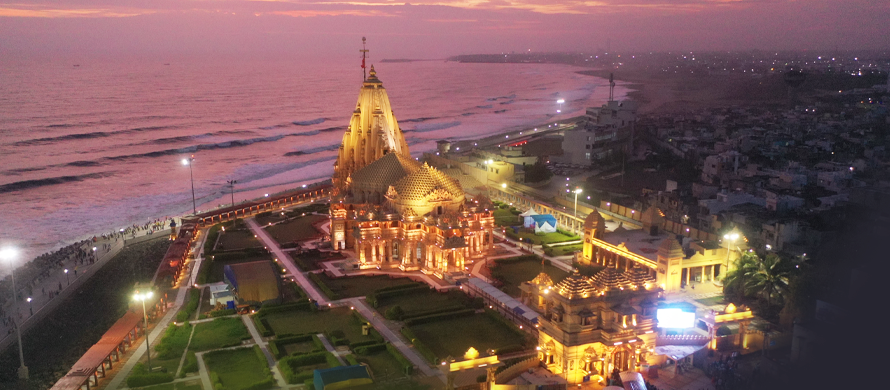
Temple Details
- 📍 Location: Veraval, Gujarat
- 🕒 Timings: 6:00 AM to 9:00 PM
- 🕉️ Aarti: 7:00 AM, 12:00 PM, 7:00 PM
- ✨ Special: Light & Sound Show at 8:00 PM
Somnath Jyotirlinga
Somnath is the first and most famous Jyotirlinga in India. It is located near Veraval on the western coast of Gujarat. The name "Somnath" literally translates to the “Lord of the Moon”.
The Legend: As per Shiv Purana, Soma (the Moon God) married the 27 daughters of Daksha Prajapati but neglected them, favoring only Rohini. Angered by this, Daksha cursed the Moon that he would lose his luster, beauty, and gradually fade away. Terrified, the Moon worshipped Lord Shiva intensely to get rid of this severe curse. Pleased with his devotion, Lord Shiva blessed him and partially retrieved his light, appearing as a Jyotirlinga at this spot.
History & Architecture: The Somnath temple has an incredibly resilient history. It was first built by the Moon God in pure gold, later by King Ravana in silver, by Lord Krishna in sandalwood, and finally by King Bhimadev in stone. Over the centuries, the temple was destroyed and plundered multiple times by foreign invaders, only to be constantly rebuilt by devoted Hindu rulers. The latest temple, constructed with beautiful reddish-yellow stones in the Chalukya style of architecture, was inaugurated by the first Indian President, Dr. Rajendra Prasad, in 1951.
Darshan Rules: Today, devotees are not allowed to go inside the inner sanctum (garbhagriha) to touch the holy linga. However, through a special mechanical device, devotees can still offer sacred Ganga water directly onto the Jyotirlinga.

Temple Details
- 📍 Location: Srisailam, Andhra Pradesh
- 🕒 Timings: 4:30 AM to 10:00 PM
- 🏔️ Setting: Nallamala Hills
- ✨ Special: Shakti Peeth & Jyotirlinga
Mallikarjuna Jyotirlinga
Lord Shiva's second Jyotirlinga, Mallikarjuna, is located majestically in Srisailam, Andhra Pradesh. Often referred to as the "Kashi of the South," it is an incredibly rare sacred site that houses both a Mahadevi Shakti Peetha (Goddess Bhramaramba) and a Jyotirlinga in the same complex.
The Legend: As per the Shiv Purana, when Lord Ganesha was married off before Lord Kartikeya, Kartikeya became furious and left Mount Kailash to stay alone on the Krauncha Mountain. Deeply saddened by their son's departure, Lord Shiva and Goddess Parvati visited him. The Jyotirlinga here is considered a unified form: "Mallika" indicates Goddess Parvati, and "Arjuna" indicates Lord Shiva. Thus, their combined divine energy graces this shrine.
Architecture & Location: The temple is beautifully situated in the dense Nallamala hills along the banks of the sacred river Krishna (locally known as Patal Ganga). The complex features massive, elaborately sculpted walls, imposing gopurams (gateways), and exquisite Vijayanagara architectural elements. Devotees often take a holy dip in the Krishna river before trekking up to the temple for darshan.

Temple Details
- 📍 Location: Ujjain, Madhya Pradesh
- 🕒 Timings: 4:00 AM to 11:00 PM
- 🕉️ Aarti: Famous Bhasma Aarti at 4 AM
- 👑 Special: Only South-facing Jyotirlinga
Mahakaleshwar Jyotirlinga
Mahakaleshwar Jyotirlinga is situated on the banks of the sacred Kshipra river, historically emerging from the dense Mahakal forest in Ujjain, Madhya Pradesh. It is highly revered as the only 'Swayambhu' (self-manifested) and 'Dakshinamukhi' (south-facing) Jyotirlinga, giving it immense tantric and spiritual power.
The Legend: There are many profound stories regarding how this linga came into existence. A famous legend tells of a five-year-old boy named Shrikar. Inspired by the deep devotion of King Chandrasena of Ujjain, young Shrikar took a round stone and began worshipping it fervently as Lord Shiva. Despite physical obstacles and attempts by others to disturb his meditation, his devotion only intensified. Moved by the child's pure love, Lord Shiva assumed the form of Jyotirlinga in the Mahakal forest to permanently protect his devotees in Ujjain.
Bhasma Aarti & Rituals: Mahakaleshwar (The Lord of Time and Death) is globally famous for the daily Bhasma Aarti performed before dawn. This rare ritual involves waking the deity and offering fresh sacred ash. According to tradition, Mahakal is the eternal King (Raja) of Ujjain, and no earthly royal or current head of state ever spends the night within the city limits out of respect for this cosmic sovereignty.

Temple Details
- 📍 Location: Mandhata Island, MP
- 🕒 Timings: 5:00 AM to 10:00 PM
- 🌊 Setting: Narmada River
- ✨ Special: Om (ॐ) shaped island
Omkareshwar Jyotirlinga
Omkareshwar Jyotirlinga is uniquely situated on a natural Om-shaped island called Mandhata, positioned in the middle of the mighty Narmada River in Madhya Pradesh (about 80 km from Indore). The literal translation of Omkareshwar is the "Lord of Omkara" or the Lord of the 'Om' sound, the primordial vibration of creation.
The Legend: According to ancient scriptures, there was once a terrible war between the Devas (gods) and Danavas (demons), in which the Danavas emerged victorious. Facing this tremendous setback, the Devas fiercely prayed to Lord Shiva for redemption. Pleased with their collective prayers, Lord Shiva emerged in the radiant form of Omkareshwar, empowering them to defeat the Danavas and restore cosmic balance.
Twin Temples: The divine energy here is split across a river. While Omkareshwar is on the island, another vital temple known as Mamleshwar (or Amareshwar) sits on the river's mainland bank. Traveling to both shrines is common; they are so close that devotees typically take a short boat ride or cross the pedestrian suspension bridge to absorb the complete Jyotirlinga experience. A parikrama (circumambulation) of the entire island across the rolling hills is highly auspicious.

Temple Details
- 📍 Location: Rudraprayag, Uttarakhand
- 🕒 Timings: 4:00 AM to 9:00 PM
- 🏔️ Altitude: 11,755 ft (3,583 m)
- ❄️ Season: Open May to Mid-November
Kedarnath Jyotirlinga
Perhaps the most eagerly awaited and arduous destination for pilgrims is the Kedarnath Jyotirlinga. Located high in the Garhwal Himalayan range near the Mandakini river, at an astounding height of nearly 12,000 feet, Kedarnath represents the pinnacle of spiritual dedication. It is the highest of the 12 Jyotirlingas and a key component of the revered Chardham Yatra.
The Legend: Its deep mythology connects directly to the Mahabharata. It is believed that over 3,000 years ago, the five Pandava brothers sought Lord Shiva to cleanse them of the sins of the Kurukshetra war. Shiva, eluding them, took the form of a bull. When Bhima tried to catch him, Shiva dove into the earth, leaving only his hump above ground at Kedarnath. The remaining parts of the bull manifested at the four other 'Panch Kedar' sites.
Accessibility & Journey: Due to extreme winter snowfall, the temple and township remain entirely closed for roughly six months of the year. During winter, the deity is ceremoniously moved to Ukhimath. The massive stone architecture, constructed using immense interlocking slabs without mortar, remarkably survived the devastating 2013 flash floods, standing as a testament to its indestructible divine grace. The journey itself requires a challenging 16-22 kilometer trek from Gaurikund, though helicopter services have made access significantly easier.

Temple Details
- 📍 Location: Near Pune, Maharashtra
- 🕒 Timings: 4:30 AM to 9:30 PM
- 🌄 Geography: Sahyadri Wildlife Sanctuary
- ✨ Special: Origin of Bhima River
Bhimashankar Jyotirlinga
Bhimashankar is nestled in the lush Sahyadri hills heavily blanketed by forests, located near Pune in Maharashtra. It serves as the geographical source of the Bhima River, which later merges with the Krishna river. The temple boasts impressive Nagara architectural patterns built with solid black rock.
The Legend: The ancient narrative states that a powerful demon named Bhima (the son of Kumbhakarna and Karkati) wreaked havoc upon the world and imprisoned Lord Shiva’s ardent devotee, King Kamrupeshwar. As the demon raised his sword to strike the meditating King, Lord Shiva fiercely appeared, reduced the demon to ashes after a colossal battle, and, upon the prayers of the Gods, manifested eternally at that site as the Bhimashankar Jyotirlinga.
Surroundings: Beyond the deep religious meaning, the temple sits inside the Bhimashankar Wildlife Sanctuary, a biodiversity hotspot famous for the Indian Giant Squirrel and dense monsoon greenery. Pilgrims often complete their visit by praying at the nearby Kamalaja Mata temple, an avatar of Goddess Parvati who reportedly aided Shiva in his battle against Tripura demon.

Temple Details
- 📍 Location: Varanasi, Uttar Pradesh
- 🕒 Timings: 3:00 AM to 11:00 PM
- 🌊 Setting: Banks of Ganga River
- ✨ Special: City of Moksha
Kashi Vishwanath Jyotirlinga
Varanasi (Kashi or Banaras) is considered one of the oldest living cities in the world, and holding the heart of its spiritual pulse is the Kashi Vishwanath Jyotirlinga. Situated intimately on the western bank of the holy river Ganga in Uttar Pradesh, it is widely considered the ultimate spiritual destination for a Hindu.
The Legend: It is deeply believed that Kashi rests on the trident (Trishul) of Lord Shiva. The Vishwanath (Ruler of the Universe) Linga represents Shiva's supreme form in meditation. According to theology, Kashi is the original Jyotirlinga where Shiva's infinite light broke through the earth towards heaven to assert his absolute power over Brahma and Vishnu.
Spiritual Magnetism: Millions believe that dying in Kashi or scattering ashes in the Ganges here grants an automatic gateway to Moksha (liberation from the cycle of rebirth). The temple was historically destroyed and restored several times, significantly reconstructed under the patronage of Maratha ruler Ahilyabai Holkar in 1780. The recent Kashi Vishwanath Corridor has brilliantly transformed the complex, elegantly connecting the ancient shrine directly with the sacred Ghats of the Ganges.

Temple Details
- 📍 Location: Nashik, Maharashtra
- 🕒 Timings: 5:30 AM to 9:00 PM
- 🌊 Focus: Origin of Godavari River
- 💎 Special: Three-faced lingam (Brahma, Vishnu, Mahesh)
Trimbakeshwar Jyotirlinga
Situated 28 kilometers from the beautiful city of Nashik in Maharashtra, the ancient Trimbakeshwar Jyotirlinga sits firmly at the foothills of the Brahmagiri mountain. Notably, this is perfectly adjacent to the origin of the sacred Godavari River, often heralded as the Gautami Ganga.
The Unique Lingam: Unlike any other Jyotirlinga, the linga here features three distinct thumb-sized pillars (faces) resting in a central depression. These uniquely represent the Hindu Trinity—Lord Brahma, Lord Vishnu, and Lord Shiva (Mahesh). Because of excessive water and prayers, the original lingam structure eroded slightly, so a jewel-studded golden mask typically adorns the linga.
Pujas and Beliefs: Trimbakeshwar acts as the crucial religious center where major rituals like Narayan Nagbali, Kalsarp Dosh Nivaran, Tripindi Shradh, and Maha Mrityunjay mantras are exclusively performed by the specific *Tamrapatradhari Purohit Sangh*. The town also hosts the grand Simhastha Kumbh Mela every 12 years.

Temple Details
- 📍 Location: Deoghar, Jharkhand
- 🕒 Timings: 4:00 AM to 9:00 PM
- 🌊 Special: Largest Shraavana Mela
- ✨ Also known as: Baba Dham
Vaidyanath Jyotirlinga
Vaidyanath Jyotirlinga, affectionately and widely known as Baba Dham or Baidyanath Dham, is located in the thriving religious town of Deoghar, Jharkhand. It forms a deeply integral part of Eastern India's spiritual belt.
The Legend: The ancient epic details how the demon king Ravana performed intense penance to Lord Shiva here, offering his ten heads one by one as a sacrifice. Pleased with his extreme devotion, Shiva acts as a 'Vaidya' (physician) to heal him. Shiva gave him a Jyotirlinga to take back to Lanka, on the absolute condition it should never be placed on the earth during transit. The Gods, fearing Ravana's invincibility, cleverly tricked him (by having Lord Varuna enter his body, causing intense bladder pressure). Handing it over to Lord Ganesha in disguise, the linga was placed on the earth at Deoghar, permanently embedding itself.
The Kanwar Yatra: Every year during the holy month of Shraavana (July-August), millions of devotees complete the phenomenal Kanwar Yatra. They carry holy water from the Ganges at Sultanganj and trek barefoot for over 100 kilometers to pour it on Baba Baidyanath. The atmosphere is electric and painted vast lengths of saffron.

Temple Details
- 📍 Location: Dwarka, Gujarat
- 🕒 Timings: 5:00 AM to 9:00 PM
- 🗿 Special: Giant Shiva Statue
- 🌊 Setting: Saurashtra Coast
Nageshwar Jyotirlinga
Also known as the Nagnath temple, this beautiful shrine sits firmly on the route between Gomati Dwarka and the holy Bait Dwarka Island, positioned along the stunning coast of Saurashtra in Gujarat. It commands immense respect as a protector from serpents and all manner of earthly poisons.
The Legend: The Shiv Purana beautifully explains the story of an ardent Shiva devotee named Supriya, who was mercilessly captured by an evil demon named Daruka. Confined in absolute darkness with others, Supriya inspired the prisoners to chant the "Om Namah Shivaya" mantra continuously. Enraged, Daruka moved to execute him. Promptly, Lord Shiva manifested through the earth as a resplendent Jyotirlinga, saving his devotee and establishing himself permanently as Nageshwar—the lord of serpents.
The Aesthetics: The exterior boasts an incredibly commanding 25-meter (82-foot) tall, towering statue of a meditative Lord Shiva, surrounded by beautifully maintained lush gardens. It uniquely features the Jyotirlinga facing South, while the main temple structure is carefully oriented to properly encompass it.

Temple Details
- 📍 Location: Rameswaram Island, Tamil Nadu
- 🕒 Timings: 5:00 AM to 9:00 PM
- 🌊 Special: 22 Sacred Wells (Teerthas)
- ✨ Architecture: Longest Corridors
Rameshwaram Jyotirlinga
Positioned at the very southern tip of the Indian peninsula on Pamban Island, Tamil Nadu, the Ramanathaswamy Temple is celebrated for housing the majestic Rameshwaram Jyotirlinga. Beyond being a Jyotirlinga, it is highly significant as one of the elite original Char Dhams (established by Adi Shankara).
The Legend: According to the sacred Ramayana, Lord Rama paused here before constructing the bridge to Lanka. To wash away the sin of killing a Brahmin (Ravana), Rama wished to worship Shiva. He dispatched Lord Hanuman to bring a Lingam from Kashi. When Hanuman was delayed, Mother Sita lovingly crafted a symbolic Lingam out of beach sand (the Ramalinga). When Hanuman returned with his Linga (Vishwalinga), Rama decreed that Hanuman's Linga should always be worshipped first—a tradition beautifully followed to this very day.
The Sacred Rituals: The temple represents a pinnacle of monumental Dravidian architecture, featuring awe-inspiring corridors that are the longest in the world, flanked by thousands of richly carved pillars. The spiritual process famously mandates that prior to entering the inner sanctum, one must first dip in the ocean (Agnitheertham) and subsequently bathe sequentially in 22 incredibly sacred water bodies (Teerthams) securely located within the temple precincts.

Temple Details
- 📍 Location: Near Ellora Caves, Maharashtra
- 🕒 Timings: 5:30 AM to 9:30 PM
- 🏗️ Architecture: Red & Black Stone
- ✨ Setting: Very close to Daulatabad Fort
Grishneshwar Jyotirlinga
Grishneshwar marks the final and twelfth sacred Jyotirlinga. It beautifully sits in the quiet village of Verul, very close to the globally renowned Ellora Caves and the Daulatabad Fort near Aurangabad (Chhatrapati Sambhajinagar), Maharashtra.
The Legend: According to the timeless Shiva Purana, a highly devoted woman named Kusuma used to worship Lord Shiva daily by immersing a newly made lingam in a local tank. Her immense piety bred bitter jealousy in her husband's first wife, who tragically murdered Kusuma's beloved son out of spite. Deep in unrelenting sorrow, Kusuma still carried on her daily Shiva worship. Lord Shiva, immensely moved by her unwavering emotional fortitude, phenomenally miraculously resurrected her deceased son and manifested as Grishneshwar (Lord of Compassion) at the specific site.
Temple Aesthetics: Constructed passionately from distinct red volcanic rocks with a unique Shikhara-style sweeping architecture, the temple hosts incredibly detailed spiritual carvings of Dashavatar and diverse Gods and Goddesses. A large, prominent Nandi bull sculpture greets visitors gracefully in the central court hall.
I hope this comprehensive detailed guide greatly helps you intuitively understand the deep history, powerful stories, and exact locations of all 12 Jyotirlingas in India.
🗺️ State-wise Distribution of 12 Jyotirlinga
| State | Number of Jyotirlinga | Jyotirlinga Names |
|---|---|---|
| Maharashtra | 3 (or 5 counting all) | Bhimashankar, Trimbakeshwar, Grishneshwar |
| Madhya Pradesh | 2 | Mahakaleshwar (Ujjain), Omkareshwar |
| Gujarat | 2 | Somnath, Nageshwar (Dwarka) |
| Uttar Pradesh | 1 | Kashi Vishwanath (Varanasi) |
| Uttarakhand | 1 | Kedarnath |
| Andhra Pradesh | 1 | Mallikarjuna (Srisailam) |
| Jharkhand | 1 | Vaidyanath (Deoghar) |
| Tamil Nadu | 1 | Rameshwaram |
🕐 Darshan Timings – All 12 Jyotirlinga at a Glance
| Jyotirlinga | Morning Opens | Evening Closes | Special Aarti |
|---|---|---|---|
| Somnath | 6:00 AM | 9:30 PM | 7 AM, 12 PM, 7 PM |
| Mallikarjuna | 6:30 AM | 10:00 PM | 5:30 AM Suprabhatam |
| Mahakaleshwar | 4:00 AM (Bhasma Aarti) | 11:00 PM | Bhasma Aarti ~4 AM |
| Omkareshwar | 5:00 AM | 10:00 PM | 5 AM, 8 PM Aarti |
| Kedarnath | 4:00 AM | 9:00 PM | Dawn Abhishek |
| Bhimashankar | 4:30 AM | 9:30 PM | 4:30 AM Pratah Aarti |
| Kashi Vishwanath | 3:00 AM | 11:00 PM | 3 AM Mangala Aarti |
| Trimbakeshwar | 5:30 AM | 9:00 PM | 5:30 AM, 8 PM |
| Vaidyanath | 4:00 AM | 9:30 PM | Dawn Aarti |
| Nageshwar | 6:00 AM | 9:00 PM | 7 AM, 12 PM, 7 PM |
| Rameshwaram | 5:00 AM | 9:00 PM | 5 AM, 12 PM, 8 PM |
| Grishneshwar | 5:30 AM | 9:30 PM | 5:30 AM Pratah Aarti |
Note: Timings may vary on festivals and special occasions. Always confirm before visiting.
🙏 Plan Your Ujjain Jyotirlinga Yatra
Mahakaleshwar & Omkareshwar — both Jyotirlinga are in Madhya Pradesh. Book your complete Ujjain-Omkareshwar darshan package with hotel, cab, and guided temple visits.
Book Bhasma Aarti & Tour Package →🗓️ How to Plan Your Dwadash Jyotirlinga Yatra
Completing all 12 Jyotirlinga darshan is a lifetime ambition for millions of Shiv devotees. Here's how to plan it smartly — whether you want to do it in one trip or in multiple phases.
Route 1: North & Central India Circuit (7–10 days)
- Day 1–2: Kashi Vishwanath (Varanasi)
- Day 3–4: Mahakaleshwar (Ujjain) + Omkareshwar (same day possible with cab)
- Day 5: Vaidyanath (Deoghar) — fly from Indore/Bhopal to Ranchi
- Day 6–7: Kedarnath (seasonal, May–Nov only)
Route 2: South India Circuit (7–8 days)
- Day 1–2: Mallikarjuna (Srisailam, Hyderabad base)
- Day 3–4: Rameshwaram
- Day 5–6: Grishneshwar (near Aurangabad/Ellora)
- Day 7–8: Bhimashankar + Trimbakeshwar (Maharashtra circuit)
Route 3: Gujarat Circuit (3–4 days)
- Day 1–2: Somnath → Dwarka
- Day 3: Nageshwar (just 17 km from Dwarka)
🚌 Pro Tip: Ujjain–Omkareshwar in One Day
Mahakaleshwar darshan done? Omkareshwar is just 130 km from Ujjain — a 2.5 hour drive. You can do both Jyotirlinga in MP in a single well-planned day. Our Ujjain + Omkareshwar day tour package covers cab, guide, and temple entry assistance.
📅 Best Time to Visit Jyotirlinga Temples
| Season | Months | Ideal For | Crowd Level |
|---|---|---|---|
| Winter | Oct – Feb | All Jyotirlinga except Kedarnath | 🟡 Moderate–High (Shivratri peaks) |
| Spring | Mar – Apr | South India Jyotirlinga, Gujarat | 🟢 Low–Moderate |
| Summer | May – Jun | Kedarnath (opens May), Bhimashankar | 🔴 Very High (school holidays) |
| Monsoon | Jul – Sep | Sawan season — all temples extra special | 🔴 Extreme (Sawan Somvar rushes) |
Sawan ka mahina (July–August) is the most auspicious time to visit any Jyotirlinga. Lakhs of Kanwariyas travel to pour Ganga jal on Shivalingas. Expect massive crowds but also an incredibly charged spiritual atmosphere.
Maha Shivratri (February–March) is the single biggest day at every Jyotirlinga. If you're visiting Mahakaleshwar, book your Bhasma Aarti slot months in advance.
🙏 Dwadash Jyotirlinga Stotram (Mantra)
The Dwadash Jyotirlinga Stotram composed by Adi Shankaracharya lists all 12 Jyotirlinga in shloka form. Reciting this daily is believed to be equivalent to visiting all 12 shrines:
उज्जयिन्यां महाकालमोङ्कारममलेश्वरम्॥
परल्यां वैद्यनाथं च डाकिन्यां भीमशङ्करम्।
सेतुबन्धे तु रामेशं नागेशं दारुकावने॥
वाराणस्यां तु विश्वेशं त्र्यम्बकं गौतमीतटे।
हिमालये तु केदारं घुश्मेशं च शिवालये॥
एतानि ज्योतिर्लिङ्गानि सायं प्रातः पठेन्नरः।
सप्तजन्मकृतं पापं स्मरणेन विनश्यति॥
💼 Important Travel Tips for Jyotirlinga Darshan
Dress Code
- Wear traditional Indian attire — dhoti-kurta for men, saree or salwar for women is ideal
- Avoid shorts, sleeveless tops, and western formals inside the sanctum
- Some temples like Mahakaleshwar require a separate dhoti at the entrance (available for rent)
What to Carry
- Government ID (Aadhaar/Passport) — mandatory for darshan booking at many Jyotirlinga
- Booking confirmation printout or screenshot (for VIP/online slots)
- Flowers, bilva patra (Bel leaves), and prasad (check what each temple allows)
- Cash — many temple shops and prasad stalls are cash-only
- Comfortable footwear that slips on/off easily
General Rules
- Mobile phones and cameras are not allowed in the inner sanctum of most Jyotirlinga
- Leather items (belts, wallets, bags) are not permitted inside the garbhagriha
- Maintain silence in the sanctum — be respectful of other devotees
- Photography in the outer areas is usually allowed — always check signboards
🏛️ Madhya Pradesh Jyotirlinga – Mahakaleshwar & Omkareshwar
Madhya Pradesh is home to 2 Jyotirlinga — making it one of the best destinations for a focused Jyotirlinga yatra. Both are easily combined in a 2–3 day trip from Indore.
Mahakaleshwar Jyotirlinga, Ujjain
Located in the ancient city of Ujjain, Mahakaleshwar is the only Jyotirlinga that is Dakshinamukhi (south-facing) — a rare and extremely powerful spiritual orientation. The famous Bhasma Aarti at 4 AM, where sacred ash is applied to the lingam, draws thousands of devotees from across India and the world.
- Bhasma Aarti: Starts ~4:00 AM | Reporting time: 2:30 AM
- Temple opens: 4:00 AM | Closes: 11:00 PM
- Online Booking: Available via official portal — book 30–60 days in advance
- Nearest Airport: Indore (Devi Ahilyabai Holkar Airport) — 60 km
→ Book Bhasma Aarti Slot for Mahakaleshwar
Omkareshwar Jyotirlinga
Omkareshwar sits on a sacred island in the Narmada River near Khandwa, MP. The island itself is shaped like the sacred syllable OM (ॐ) when viewed from above — a divine natural wonder. The Omkareshwar Jyotirlinga and the nearby Mamleshwar temple make this a deeply immersive spiritual experience.
- Temple Timings: 5:00 AM – 10:00 PM
- Distance from Ujjain: ~130 km (2.5 hours by road)
- Distance from Indore: ~77 km (1.5 hours by road)
- Nearest Station: Omkareshwar Road (Mortakka)
Divine Gallery


Advertisement